
Modular Real Estate Development for Investors What to Consider

Real estate investors do not simply invest in buildings. They invest in land, approvals, demand, timing, costs, and the future performance of an asset.
That is why modular construction should not be judged only as a faster way to build. For investors, the better question is whether modular construction supports a clear development strategy on a specific piece of land.
A modular approach can fit several property types, including rental housing, townhome communities, boutique resorts, workforce housing, short-term rental communities, senior-oriented housing, infill developments, and institutional projects. JussConstruct’s current development materials also identify multi-unit developments, workforce housing, boutique resorts, short-term rental communities, senior housing initiatives, and institutional projects as potential applications for investor and development models.
The building system matters, but it should come after the investment thesis. Strong modular real estate development starts with the opportunity, not the product.

Start with what the land can support
The first question should be simple:
What can the property support?
That question matters more than, “Which building do we want to put there?”
Land drives the development model. A parcel may look attractive because the price is low, the location is growing, or the seller is motivated. None of that means the site can support the project an investor has in mind.
Before evaluating a modular building plan, investors should look at the basic land constraints:
Zoning and allowed uses
Density limits
Setbacks and height restrictions
Parking requirements
Access to roads
Utility availability
Drainage and stormwater needs
Soil conditions
Environmental limits
Neighboring land uses
Local approval processes
A site that works for a small short-term rental community may not work for workforce housing. A parcel that supports townhomes may not support a boutique resort. A site that appears suitable for senior-oriented housing may require design choices tied to access, parking, walkability, and nearby services.
The land gives the project its boundaries. Modular construction can help with speed, consistency, and repeatable design, but it does not override zoning, site conditions, or market demand.
Evaluate the development model before the building system
Investors often hear modular construction discussed in terms of factory-built components, shorter field schedules, and controlled production. Those things can matter, but they are not enough to make a project investable.
The broader development model needs to work first.
Development question | What investors should examine |
Acquisition cost | Whether the land price leaves room for site work, approvals, construction, financing, and return expectations |
Development potential | How much can realistically be built under current rules and site conditions |
Construction strategy | Whether modular, site-built, or a hybrid approach fits the project |
Infrastructure | Roads, utilities, grading, drainage, septic or sewer, power, and connection costs |
Approvals | Entitlements, permits, design review, environmental review, and local requirements |
Market | Who will live in, rent, buy, or use the finished property |
Operations | How the property will perform after completion |
A modular building may be well designed, but the project can still fail if site costs are too high, the approval path is unclear, or the finished product does not match local demand.
For example, a short-term rental community may need strong tourism demand, clear local rental rules, parking, guest amenities, and an operating plan. A workforce housing project may need proximity to employers, transportation routes, schools, and services. A senior housing initiative may need careful attention to accessibility, floor plans, outdoor areas, and long-term management.
The structure is only one part of the equation.
Match the modular approach to the property type
Modular construction is not one fixed model. Different project types require different planning, layouts, unit mixes, and operating assumptions.
A developer looking at rental housing may focus on unit count, durability, maintenance, and long-term occupancy. A townhome project may focus on site planning, resale demand, financing, and neighborhood fit. A boutique resort may care more about guest experience, privacy, views, amenities, and phasing.
That is why investors should avoid treating modular construction as a single answer. It is better to ask which modular strategy fits the asset.
Rental housing and multi-unit projects
For rental housing, investors often care about repeatable unit layouts, speed to occupancy, and predictable operations. Modular construction may support those goals when the site allows enough density and the unit design matches renter demand.
The key questions include:
How many units can the parcel support?
What rents are realistic in the area?
What amenities do renters expect?
How will property management handle maintenance?
Does the construction schedule align with financing assumptions?
A rental project needs more than units. It needs parking, circulation, waste handling, lighting, landscaping, and durable materials that can perform under daily use.
Workforce housing
Workforce housing requires a practical approach. The project should match local employment patterns and household budgets. Investors should study nearby job centers, commuting routes, school access, and local housing shortages.
Modular construction may help create repeatable housing layouts, but affordability depends on the full cost stack. Land, infrastructure, financing, approvals, insurance, taxes, and operating expenses all affect the final outcome.
Short-term rental communities and boutique resorts
For resorts and short-term rental communities, the property experience carries more weight. Guests may care about privacy, views, outdoor spaces, design, and convenience.
The model also depends on local short-term rental rules. Some markets welcome these projects. Others limit them or require specific permits. Investors should confirm the legal path before assuming nightly rental income.
A successful project may combine modular units with shared amenities, walking paths, fire pits, water features, or gathering areas. The best site plan often matters as much as the units themselves.
Senior-oriented housing
Senior-oriented housing can take many forms, from independent living communities to smaller age-friendly developments. Accessibility, safety, maintenance, and proximity to services all matter.
Modular construction can support consistent layouts, but the project must address day-to-day use. Investors should think about entries, bathrooms, lighting, walking paths, parking, emergency access, and community spaces.

Look closely at infrastructure and site work
Modular buildings are built in a controlled setting, but the land still needs real construction work. Investors should pay close attention to the costs that happen outside the factory.
Site costs can include:
Clearing and grading
Foundations
Utility extensions
Water and sewer connections
Septic systems where public sewer is not available
Electrical service upgrades
Stormwater management
Roads and driveways
Sidewalks and paths
Fire access
Landscaping and screening
Retaining walls
Crane access or set areas
These costs can change the economics of a project. A flat infill parcel with existing utilities may support a very different budget than a rural site that needs new roads, long utility runs, or major grading.
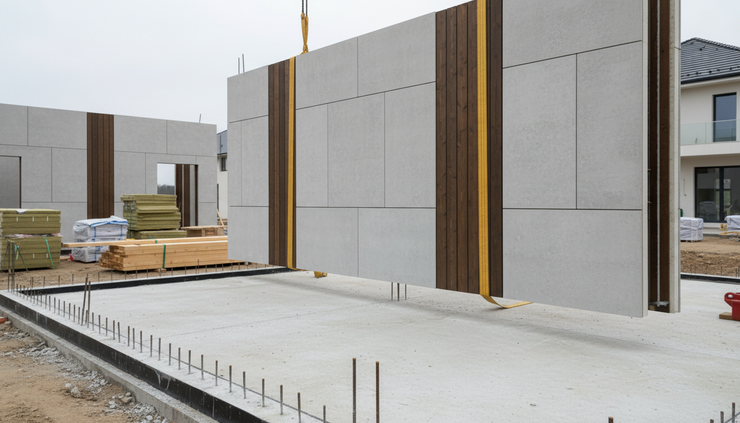
Delivery and installation also need planning. Modular sections require transportation routes, staging areas, crane access, and coordination with foundation work. If a site has tight access, steep slopes, overhead wires, or narrow roads, the logistics may require extra planning and cost.
The factory-built portion may be predictable, but the site is rarely generic. Good due diligence treats the land as its own project.
Understand approvals before assuming speed
Modular construction may reduce certain construction timelines, especially when site work and factory production can happen at the same time. That does not mean the full project timeline will be short.
Approvals can be the deciding factor.
Investors should identify what the local jurisdiction requires before construction can begin. Depending on the site and project type, this may involve zoning review, site plan approval, subdivision approval, building permits, utility approvals, fire review, health department review, environmental review, or design standards.
A project may also trigger public hearings or neighborhood questions. This can happen with rental housing, short-term rentals, workforce housing, and higher-density infill projects.
The modular method does not remove the need for local approval. It may help once the project is permitted and ready to build, but permits and entitlements still set the pace.
Make the market prove the concept
Every development strategy needs a clear user. Investors should define who the finished property serves before they commit.
That user may be:
A renter seeking attainable housing near work
A family buying a townhome
A traveler booking a short-term stay
An employer needing workforce housing options
A senior resident seeking a smaller, easier-to-maintain home
An institution needing repeatable housing or lodging capacity
The project should match the behavior of that group. Short-term guests care about booking platforms, photos, amenities, location, and reviews. Long-term renters care about rent, commute, storage, parking, safety, and maintenance. Buyers care about financing, resale value, neighborhood fit, and monthly costs.
The market study does not need to be complicated at the early stage, but it should be honest. Investors should review comparable properties, vacancy patterns, rental rates, sale prices, local supply, planned competition, and local rules.
A modular project can be well built and still miss the market. Demand should shape the product from the beginning.
Think beyond one project and study repeatability
One reason modular construction attracts investor attention is repeatability. If a development concept works on one site, the same general model may be adapted to future sites.
That changes the planning conversation.
Instead of asking whether one building can be delivered, investors can ask whether the concept can become a repeatable property strategy. That could apply to a workforce housing model near employment centers, a short-term rental community concept in travel markets, or a senior-oriented housing plan in areas with aging populations.
Repeatability does not mean copying the same project exactly. Each site will have different zoning, terrain, utility conditions, costs, and market demand. The value comes from repeating the parts that do travel well.
Those parts may include:
Unit layouts
Building specifications
Vendor relationships
Operating standards
Interior packages
Site planning principles
Maintenance practices
Budget templates
Approval playbooks
A repeatable model can improve planning discipline. It can also help investors compare sites more clearly. If the team knows the target unit count, site size, infrastructure needs, and operating model, it can screen opportunities faster.
Still, repeatability should not become rigid thinking. A plan that works in one county may need major changes in another. Local conditions still decide what can be built.
Treat operations as part of the investment
Development does not end when the modular units are set. The property still has to operate.
Investors should look at the long-term plan before construction starts. This is especially true for rental housing, senior-oriented housing, resorts, short-term rental communities, and workforce housing.
Key operating questions include:
Who will manage the property?
What staffing will the asset need?
How will maintenance be handled?
What systems will track bookings, rents, or occupancy?
What insurance applies?
How will landscaping, roads, lighting, and shared areas be maintained?
What reserves are needed for repairs and replacements?
How will tenants, guests, or residents move through the property?
A development that looks strong on paper can underperform if management is weak. A property with excellent operations can protect the investment and improve the user experience.
For short-term rentals and resorts, operations carry special weight. Guest communication, cleaning schedules, repairs, access control, and local compliance all affect performance. For long-term housing, tenant experience, turnover, maintenance response, and expense control matter more over time.
Build due diligence around risk, not optimism
No building system eliminates development risk. Modular construction can support a strong plan, but investors still need careful review before moving forward.
Due diligence should cover:
Zoning and entitlement risk
Confirm what the site allows today and what approvals would be needed for the intended use.
Site and infrastructure risk
Study grading, utilities, access, drainage, soils, fire access, and any off-site improvements.
Cost risk
Review land price, site work, vertical construction, transport, installation, soft costs, financing, insurance, taxes, contingencies, and operating reserves.
Market risk
Test demand with real comparables. Review local rents, sales, occupancy, guest demand, or institutional need.
Timeline risk
Map the full schedule, including acquisition, approvals, design, production, site work, installation, inspections, and opening.
Operating risk
Understand who will manage the property and what it will cost to keep it performing.
Exit risk
Identify whether the project is meant to be held, sold, refinanced, or expanded into a larger program.
This is the point where investors should bring in qualified professionals, including land use counsel, civil engineers, architects, modular construction specialists, lenders, insurance advisers, and local operators.
This article is for informational purposes only and should not be taken as investment, legal, tax, or financial advice. Each project needs its own professional review.

Keep the investor mindset clear
Modular construction can be a useful path for rental housing, townhome communities, workforce housing, boutique resorts, short-term rental communities, senior-oriented housing, infill developments, and institutional projects. The method can support repeatable planning and clear production standards.
But the investment does not begin with a module. It begins with the site and the opportunity.
The strongest investors ask better questions early:
What can the land support?
What does the market need?
What approvals are required?
What will site work cost?
Which construction strategy fits the project?
How will the asset perform after completion?
Can the concept be repeated on other sites?
A modular strategy works best when it serves a disciplined development plan. Start with the land, test the market, price the full project, and build the model around real constraints. The building system should support the opportunity, not distract from it.


Comments